SCREENING

- Community outreach
- Screening

Why Screening
Cancer is the second leading cause of death in the world, accounting for ~8.8 million deaths globally in 2015 alone. In 2016, India recorded an occurrence of 14.5 lakh new cancer cases, and 7.36 lakh deaths. The mortality rates can be explained by the fact that 70% of cancer patients begin their treatment in advanced stages thus reducing the chances of survival. This highlights the fact that cancers in India tend to be detected late, leaving little opportunity for effective management and patient survival.
Common barriers that ail screening programs include poor health literacy; limited access to primary care; inaccurate clinical assessments and delays in clinical diagnosis; inaccessible diagnositc testing, pathology and staging; poor coordination of services and poor follow-up; financial , logistic and geographic barriers; and sociocultutal barriers.
What are we doing
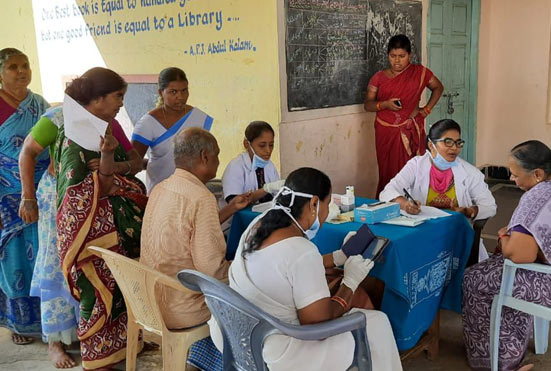
The team follows two main approaches for our screening programmes — organised and opportunistic screening wherein asymptomatic individuals are screened for cancer.
The team works in close partnership with National Health Mission (NHM) in several states for implementing National Programme for Prevention and Control of Cancer, Diabetes, Cardiovascular Diseases and Stroke (NPCDCS).
The team is working with staff of Primary Health Centres (PHCs) for building their capacity for accurate screening and clinical diagnosis. Standard Operating Procedures (SOPs) have been put in place to regulate the process for oral, breast and cervical cancer screening. Patient Navigators have been put in place to follow-up and coordinate the diagnosis of suspected individuals and teatment of confirmed cases.
KEY OBJECTIVES
- Population based screening and opportunistic screening at all levels in the health care delivery system from sub-center and above for early detection of diabetes, hypertension and oral, breast and cervical cancers.
- Outreach camps are also focused on prevention and control of chronic Non-Communicable Diseases, especially diabetes, hypertension and common cancers (oral, breast and cervical).
- To build capacity at various levels for prevention, early diagnosis, treatment, rehabilitation and Information Education Communication (IEC) /Behaviour Change Communication (BCC).
- To coordinate and support treatment. Coordinate diagnosis of suspected cases and cost effective treatment.
- To support development of database of NCDs through Surveillance System and to monitor NCD morbidity and mortality and risk factors.