The Foundation

Who we are

India, with its rapidly growing population of 1.4 billion, is witnessing a concerning rise in the absolute number of new cancer cases. In 2023, approximately 1.5 million cases were reported by the Indian Council of Medical Research – National Cancer Registry Programme. It's crucial to remember that these figures only represent diagnosed cases, and the actual number is likely higher. This trend is projected to continue, with cancer incidences increasing by about nine percent per decade. By 2050, India is expected to have 3.4 million cancer patients.

Cancer care in India faces significant challenges, including low awareness, late detection, limited access to treatment, and high treatment costs. These challenges are further compounded by critical gaps in the existing cancer care model. These gaps include inadequate infrastructure, a shortage of healthcare professionals, and an overwhelming burden on existing resources.

The early to late-stage cancer detection ratio is 30:70. Patients must often travel long distances to get access to care, thus increasing their out-of-pocket costs for travel, stay and food.

The Tata Trusts have a long legacy of Cancer Care, starting in 1941 when they established the Tata Memorial Hospital in Mumbai (then Bombay). In 2012, the Trusts established the Tata Medical Center in Kolkata to address the lacunae in cancer treatment in the eastern and north-eastern regions of the country. Five years later, in 2017, the Trusts established the Tata Cancer Care Foundation in India (TCCF, earlier known as Alamelu Charitable Foundation), a Section 8 Company to transform Cancer Care in India.

TCCF’s primary focus is to implement the Trusts’ ambitious Cancer Care Initiative: ensuring affordable, high-quality healthcare to millions of Indians, closer to their homes. The purpose is driven by a set of values – Integrity, Excellence, Compassion, Responsibility and Pioneering.

Learn more

What we do

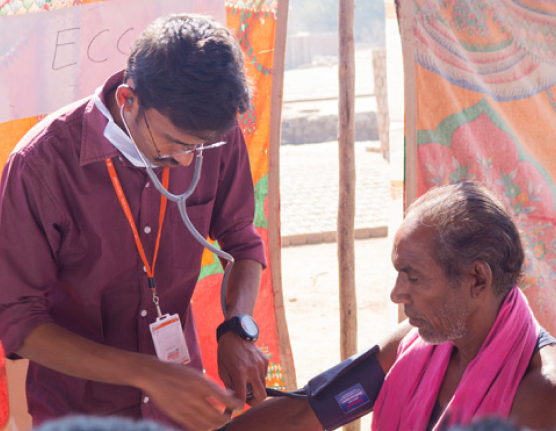
The Tata Cancer Care Foundation’s aim is to develop a network of healthcare facilities in partnership with governments and like-minded organisations to provide treatment and high-quality care for the most common cancers close to people’s homes.

The network is designed in such a way that people will not have to travel long distances for comprehensive diagnostic and full-fledged treatment facilities. It emphasises awareness; health promotion; prevention, screening and early diagnosis – all leading to timely treatment. The network will provide a cocoon of care not just to patients but also to caregivers through its holistic approach. The Foundation’s facilities will provide modern effective care with the best available technology in the country’s underserved areas. All this will go a long way in addressing the growing public health concerns about cancer.

Research is a key focus area to promote a dynamic system through the healthcare foundations in India that evolves with changing epidemiology to meet the needs of the people. The Trusts’ innovative patient-centric approach and ‘Distributed Cancer Care Model’ will ensure that cancer care in India will be amongst the best globally as well.

Learn more

KEY OBJECTIVES

  • A patient-centric healthcare model that aims to provide access to affordable, uniform, high-quality care
  • Take healthcare closer to the patient’s home. Tiered delivery of cancer care to ensure availability of care at every level
  • Targeted training of human resources to develop skilled professionals
  • Leverage technology for remote healthcare access and seamless flow of information
  • Standardisation of care and processes to enable uniform patient experience
  • Affordable care for the underprivileged through insurance schemes and innovative purchase & financing mechanisms
  • Address grassroot-level issues to reduce cancer burden – awareness & planning; screening & early detection; palliative & after-care

WHY WE NEED

a comprehensive healthcare model

  • 14.5 lakh

    New cancer cases

    reported each year

  • 70%

    cases reported at a very

    late stage of the disease

  • 40-50%

    High mortality rates

    among cancer patients

TOP